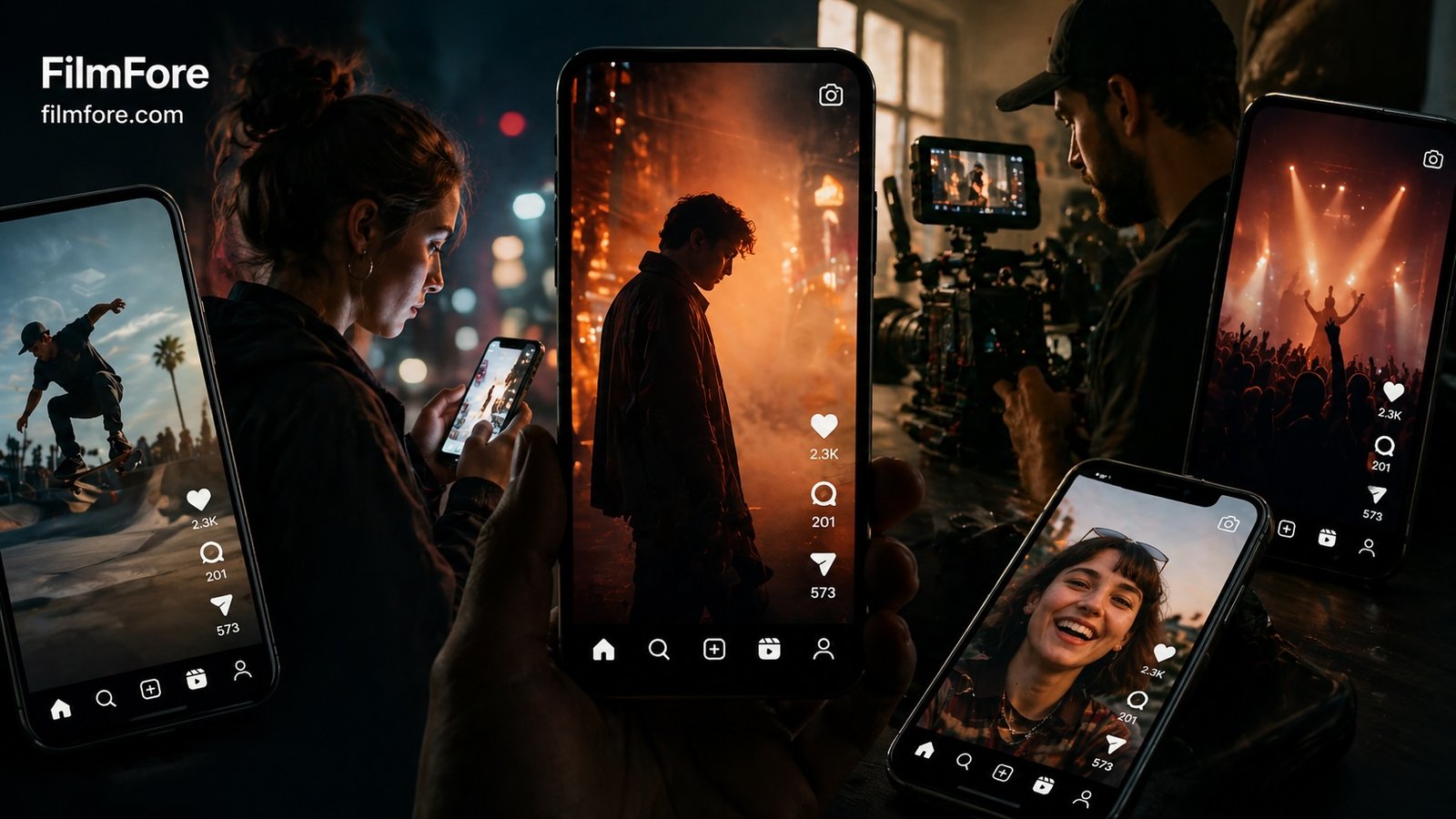
Vertical dramas have quietly built an $8 billion global industry by compressing full-length stories into 90-second episodes designed for smartphone screens. These ultra-short productions divide 60- to 100-minute narratives into bite-sized chapters, each ending with a cliffhanger that keeps viewers scrolling. What started as a Chinese trend has evolved into one of the fastest-growing scripted formats worldwide, attracting investment from major studios and unions while fundamentally changing how we produce and consume serialized content.
The format addresses a simple reality: audiences increasingly watch content on mobile devices with limited attention spans shaped by platforms like TikTok. Vertical dramas optimize for this behavior by shooting in 9:16 portrait orientation and structuring stories to deliver immediate hooks within seconds. Production costs range from $150,000 to $300,000 per series, with shoots lasting just eight to ten days, making them accessible to independent creators while offering established studios a low-risk testing ground for new concepts.
We've seen platforms like ReelShort, DramaBox, and MyDrama reach tens of millions of monthly users through monetization strategies that blend subscriptions, in-app purchases, and ad-supported tiers. As guilds like SAG-AFTRA and the WGA develop frameworks to cover vertical productions, and companies like Fox Entertainment and Telemundo invest in the space, vertical dramas are transitioning from experimental format to legitimate industry segment with distinct creative demands and business models.
Defining Vertical Dramas and Micro-Dramas
Vertical dramas represent a distinct narrative format where scripted content is shot in 9:16 portrait orientation for mobile viewing, with episodes running 60-90 seconds and structured around rapid-fire cliffhangers. The terms vertical drama and micro-drama are often used interchangeably, though micro-dramas specifically refer to the serialized narrative core of vertical storytelling.
What Makes Vertical Dramas Unique
We identify vertical dramas by three defining characteristics: portrait orientation, ultra-short runtime, and mobile-first design. Unlike traditional web series cropped for vertical viewing, these productions are conceived from the ground up for smartphone screens.
The 9:16 aspect ratio isn't simply a technical specification. It dictates visual grammar, scene composition, and how actors move within the frame. Directors must rethink blocking for vertical video, while cinematographers adapt lighting and camera movement to work within narrower horizontal space.
Episode length runs between 60-90 seconds, not as an arbitrary constraint but as a strategic design choice. This runtime matches fragmented attention patterns—the micro-moments when viewers consume content during commutes, waiting in lines, or before sleep. One-minute episodes deliver complete narrative beats without requiring sustained viewing sessions.
The format originated in China on platforms like Douyin and Kuaishou, where it generated over $500 million in quarterly revenue at its peak. Production houses in Turkey, India, and Southeast Asia have since adopted the format, creating localized versions of what started as a Chinese innovation.
Core Elements: Episode Structure and Cliffhangers
Every vertical episode operates on a precise structural formula. The opening 10 seconds resolve the previous episode's cliffhanger. The middle 60-70 seconds advance plot or deepen character stakes. The final 5 seconds deliver a new cliffhanger that compels viewers to continue.
This rhythm differs fundamentally from traditional serialized storytelling. We're not watching compressed television—we're experiencing a narrative architecture built around constant momentum. Dialogue stays minimal, visual storytelling carries emotional weight, and each scene must justify its presence within the 90-second constraint.
Cliffhangers drive the entire format. Unlike soap operas that space major reveals across weeks, vertical dramas deploy them every 60 seconds. Character betrayals, secret identity reveals, romantic complications, and revenge plot twists cascade at intervals designed to prevent viewers from stopping.
The episodic velocity creates binge behavior distinct from traditional streaming. A 22-episode series totals just 22 minutes of content, yet platforms like ReelShort report viewers consuming entire seasons in single sittings. The format delivers serialized drama's addictive qualities compressed into the consumption patterns of social media scrolling.
The Evolution from Web Series to Mobile-First Stories
Web series emerged as desktop content—landscape orientation, 5-15 minute episodes, designed for YouTube viewing on laptops. Early attempts to adapt these for mobile simply rotated or cropped existing footage, producing awkward compositions that failed to engage viewers.
Vertical dramas represent a complete departure from that adaptation approach. We're witnessing purpose-built mobile storytelling where portrait orientation, one-handed viewing, and fragmented attention aren't limitations but foundational design principles. The format didn't evolve gradually from web series—it emerged as a parallel development within China's mobile-first entertainment ecosystem.
By 2026, major studios including Disney and Fox have begun investing in vertical productions. Acting platforms report that 90% of advertised roles on Actor's Access are now for vertical dramas. What began as an experimental format has become a professional production category with dedicated infrastructure, established genre conventions, and validated audience demand across multiple territories.
Platforms and Distribution Channels
Vertical drama distribution centers on dedicated apps with IAP monetization models, while major social platforms and traditional streaming services are beginning to integrate the format into their ecosystems.
Leading Apps: ReelShort, DramaBox, and DramaWave
ReelShort, operated by COL Group, dominates the U.S. vertical drama market by revenue and brand recognition. The platform pioneered the episode-unlock model for English-speaking audiences and has invested heavily in local production. By May 2025, ReelShort maintained its position as the leading app through a combination of performance marketing and original content creation.
DramaBox generated $120 million in global in-app revenue during Q1 2025 and is actively seeking $100 million in funding at a $500 million valuation. The platform competes directly with ReelShort through aggressive expansion of its local production slate and genre diversification across romance, thriller, and fantasy categories.
DramaWave represents the growing tier of specialized micro-drama platforms targeting specific audience segments. These apps employ similar monetization mechanics but differentiate through content curation and genre focus. Most platforms offer 5-10 free episodes before requiring coin purchases or subscription payments.
The concentration of market power among these dedicated apps reflects the format's reliance on integrated monetization systems. Unlike traditional streaming, vertical drama platforms function as content-commerce hybrids where viewing and payment mechanics are inseparable.
Integrating with Social Platforms: TikTok, Douyin, and Instagram Reels
TikTok tested PineDrama, a standalone vertical drama app, in the U.S. and Brazil during 2024-2025. This experiment demonstrated the platform's interest in serialized narrative content beyond its core short-form social video offering. Douyin, TikTok's Chinese counterpart, has integrated vertical drama content directly into its main feed, allowing creators to monetize serialized stories through the existing platform infrastructure.
Instagram Reels supports vertical video but lacks the episode-unlock monetization framework that defines dedicated vertical drama apps. Creators use Reels primarily for audience acquisition, directing viewers to dedicated platforms where full series are monetized.
The fundamental challenge for social platforms is structural. Vertical drama requires persistent serialization and integrated payment systems. Social feeds prioritize algorithmic discovery and fragmented consumption patterns that conflict with the sequential viewing model vertical drama depends on.
Kuaishou, another major Chinese short video platform, has similarly experimented with vertical drama integration. These platforms provide distribution reach but cannot replicate the monetization efficiency of purpose-built vertical drama apps.
Role of OTT and SVOD Platforms
Disney+ confirmed it will launch a vertical short-form feed in 2026, marking the first major SVOD platform to formally integrate the format. Lifetime announced its first vertical drama series with attached talent, signaling traditional broadcasters' recognition of the format's commercial viability.
OTT platforms face a strategic dilemma. Vertical drama's economics depend on high-frequency micropayments or episode-level transactions. Most SVOD services operate on flat-rate subscription models that don't accommodate the pay-per-episode mechanics driving vertical drama revenue.
We observe two emerging approaches. Some platforms are creating separate vertical drama sections within existing apps, treating the format as supplemental content for current subscribers. Others are exploring hybrid monetization where vertical content sits behind additional paywalls or operates through advertising.
The entry of established streaming platforms validates vertical drama as a sustainable format. However, these platforms are entering a market where dedicated apps like ReelShort and DramaBox already control production pipelines, audience acquisition channels, and monetization infrastructure optimized specifically for the format.
Storytelling, Production, and Audience Dynamics
Vertical drama production operates on fundamentally different principles than traditional filmmaking, requiring writers to compress narrative arcs into 60-90 second episodes while maintaining emotional intensity. The format demands specific production approaches that maximize efficiency and minimize costs, while audience behavior patterns shape how creators structure their stories for maximum retention.
Narrative Techniques and Vertical Storytelling
Vertical-first storytelling compresses traditional three-act structures into serialized micro-episodes. Writers must establish character, conflict, and stakes within the first 15-20 seconds of an episode. Each 90-second chapter functions as both a complete beat and a bridge to the next installment.
The format requires writers to unlearn conventional pacing techniques. ReelShort's content team produces 15-20 scripts monthly, relying on data-driven insights to identify which story tropes generate the highest engagement. Popular themes include billionaire romances, rags-to-riches narratives, and high-stakes relationship dramas.
Common narrative patterns in vertical series:
- Opening hook within 5 seconds
- Mid-episode emotional escalation
- Cliffhanger resolution in final 5 seconds
- Episodic storytelling that builds across 60-100 total minutes
Writers working in verticals must structure scenes differently than traditional formats. A typical vertical episode contains 2-3 brief scenes maximum, with rapid dialogue exchanges and visual storytelling that works on mobile screens.
Adapting Production for the Vertical Format
Production costs for vertical dramas range from $150,000 to $300,000 per complete series. Shoots typically run 8-10 days, with crews filming 15-20 script pages in 12-hour production days. This accelerated schedule works because the 9:16 portrait format simplifies blocking and lighting setups.
The vertical format allows productions to use smaller locations and tighter framing. We see productions primarily operating in Los Angeles, Atlanta, and New York, leveraging local talent pools. Non-union productions currently dominate the space, though SAG-AFTRA introduced a Verticals Agreement for projects under $300,000.
Day-player rates start at $250 per day, with leads negotiating up to $1,200 per production. Actors can potentially book 5-7 projects monthly as supporting players or 2 projects as leads. The compressed production schedules mean talent turnover happens rapidly, allowing performers to build substantial income streams from multiple vertical series.
Mobile Audiences and Binge-Watching Behavior
Mobile audiences consume vertical dramas differently than traditional streaming content. The format capitalizes on scroll-based engagement patterns established by TikTok and similar platforms. Users typically receive 8-10 free episodes before encountering paywalls, subscription prompts, or coin-based purchasing systems.
ReelShort reports 70 million monthly active users, with 90% based in the U.S. Top-performing series generate over 350 million views. The vertical drama market grew from $500 million in 2021 to $7 billion in 2024 globally, with projections reaching $16.2 billion by 2030.
U.S. in-app revenue from short drama platforms hit nearly $350 million in Q1 2026, showing 20% quarter-over-quarter growth. Subscription models range from ad-supported free tiers to premium services costing $19.99 weekly. The gamification of content access through digital coins creates additional revenue streams while encouraging continued engagement.
Cliffhanger Mastery and User Engagement
Every vertical episode must end with a cliffhanger within the final five seconds. This structure keeps viewers scrolling to the next chapter immediately. The format exploits the same behavioral patterns that make TikTok addictive, but applies them to serialized narrative content.
User engagement metrics drive creative decisions in vertical drama production. Content teams analyze view-through rates, episode completion percentages, and payment conversion data to refine storytelling formulas. High-performing tropes get replicated across multiple series, similar to how Hollywood creates franchise installments.
The most successful vertical series use emotional escalation as their primary retention tool. Each episode intensifies the stakes while introducing new complications. Writers structure episodes so the cliffhanger moment feels both surprising and inevitable based on what preceded it.
Mobile streaming behavior shows audiences will watch dozens of episodes in single sessions when properly engaged. This binge-watching pattern differs from traditional streaming, where viewers might watch 2-3 hour-long episodes. Vertical series can deliver complete story arcs in 60-100 total minutes, matching feature film runtimes while feeling more episodic.
Monetization Models and Industry Economics
Vertical drama platforms have built an $8 billion global industry on mechanics that leverage mobile consumption habits and psychological engagement tactics. Revenue flows primarily through freemium unlocks, subscription tiers, and coin-based micropayments, while production costs remain a fraction of traditional content budgets.
Freemium and Micropayment Strategies
The core business model centers on a simple hook: viewers access the first 8-10 episodes free, then pay to continue. This freemium approach exploits the cliffhanger structure inherent to vertical dramas, where each 90-second episode ends on a dramatic reveal that makes scrolling to the next installment irresistible.
Micropayments dominate the revenue structure. Leading micro-drama apps use coin-based systems where users purchase digital currency to unlock individual episodes or complete series. This gamified approach generates consistent small transactions rather than single large purchases.
Key monetization levers include:
- Episode unlocks (pay-per-episode access)
- Digital coin purchases ($0.99 to $99.99 packages)
- Ad-supported viewing options
- Bundled episode packs
The psychological design mirrors social media engagement patterns. By keeping the next episode just one scroll away and pricing individual unlocks low, platforms reduce friction while maximizing conversion opportunities.
Subscriptions, In-App Purchases, and Revenue Trends
In-app revenue from micro-drama platforms in the U.S. reached nearly $350 million in Q1 2026, representing 20% quarter-on-quarter growth. Some platforms charge premium subscriptions up to $19.99 per week, though most offer tiered options combining subscriptions with coin purchases and ad viewing.
ReelShort operates with 70 million monthly active users, with 90% of viewership coming from the U.S. The platform blends subscription access with in-app purchases, allowing users to choose between recurring payments or one-time episode unlocks. Top-performing series attract over 350 million views, demonstrating audience appetite for mobile-first entertainment.
China's market trajectory illustrates the format's potential. Revenue grew from $500 million in 2021 to $7 billion in 2024, with projections hitting $16.2 billion by 2030. The Chinese sector generated $5.2 billion in 2023 alone—equivalent to 70% of the country's theatrical box office revenue.
Production Efficiency and Cost Structures
Vertical dramas achieve profitability through radically compressed production costs. A typical series runs $150,000 to $300,000 total budget with 8-10 day shooting schedules. Productions shoot 15-20 script pages per 12-hour day, a pace impossible under traditional union structures.
The nonunion model enables this efficiency. Day players earn minimum $250 daily rates, while lead actors negotiate up to $1,200 per production. These rates—combined with tight schedules—allow platforms to produce 15-30 series monthly.
Production cost advantages:
- Budget per series: $150,000-$300,000
- Shooting schedule: 8-10 days
- Pages per day: 15-20
- Monthly output: 15-30 series (for major platforms)
ReelShort's content team produces 15-20 scripts monthly with a 20-person writing staff. Platforms prioritize volume over individual series quality, using data analytics to identify successful tropes and rapidly iterate on proven formulas. This production model leverages available Hollywood talent during industry slowdowns while maintaining margins traditional studios cannot match.
Global Growth, Regional Trends, and the Path Ahead
The vertical drama market has expanded from a $500 million Chinese phenomenon in 2021 to an $8 billion global industry by 2024. This growth reflects distinct regional adoption patterns, with China's duanju model serving as the blueprint for Western adaptations and emerging markets developing their own localized approaches.
Origins in China and the Duanju Phenomenon
China's duanju market generated $7 billion in 2024, a figure representing roughly 70% of the country's theatrical box office revenue in 2023. The format emerged as Chinese companies identified viewer appetite for movie-length stories consumed in minute-long chapters. We've observed projections placing the Chinese market at $16.2 billion by 2030.
The duanju ecosystem operates through a distinct monetization model. Users access the first 8-10 episodes for free, then pay through coin-based systems, subscriptions reaching $19.99 per week, or ad-supported tiers. Top series accumulate over 350 million views each.
Chinese micro-dramas began international expansion in June 2022, first testing markets in India and Southeast Asia. Download surges continued through May 2023. State media reported the sector achieved gross revenues of $5.2 billion in 2023.
US Expansion and Hollywood Adoption
In-app revenue from vertical drama applications in the US reached nearly $350 million in Q1 2025, marking 20% quarter-on-quarter growth. ReelShort claims 70 million monthly active users as of October, with 90% of viewership originating from US audiences.
Production has concentrated in Los Angeles, Atlanta, and New York. Studios including Crazy Maple Studio operate with $150,000 to $300,000 budgets and 8-10 day production cycles. ReelShort's US content head and her team of 20 writers produce 15-20 scripts monthly, using data-driven approaches to identify successful tropes.
Hollywood's traditional players entered the market in 2024. Telemundo Studios announced plans to adapt telenovela storytelling for vertical formats. Fox Entertainment acquired equity in Holywater and committed to producing over 200 vertical titles across two years. Both SAG-AFTRA and WGA introduced agreements for vertical productions, with SAG's Verticals Agreement covering projects under $300,000 budgets.
Indian, Korean, and International Markets
Vertical mini-dramas expanded beyond China and the US into multiple international territories. India served as an early testing ground when Chinese applications launched overseas trials in mid-2022. The format gained traction in Southeast Asian markets simultaneously.
Market projections for 2025 place global vertical drama valuation between $3 billion and $7.21 billion. We're tracking a compound annual growth rate exceeding 10.5% through 2030. Global revenue increased 41% year-over-year as of October 2024.
Regional adaptations employ AI dubbing to localize Chinese content into multiple languages. Companies have adapted programming for Western audiences through English-language productions while maintaining the core format. The mobile-first storytelling model continues reshaping viewing habits across Asian markets, with each region developing preferences for specific narrative styles and cultural themes.
Creative Impact and Notable Examples
Vertical dramas have produced breakout hits that demonstrate the format's capacity for audience engagement and cultural impact. These successes are reshaping industry recognition structures and opening new pathways for branded content integration.
Viral Titles Like 'How to Tame a Silver Fox'
Titles such as How to Tame a Silver Fox exemplify the viral potential of vertical dramas through strategic social media marketing and targeted genre appeal. This age-gap romance gained traction on TikTok by leveraging provocative hooks and emotionally charged clips that converted casual scrollers into paying viewers.
Breaking the Ice achieved similar success by tapping into romance audiences across Indonesia and the Philippines. The series demonstrated vertical drama's ability to weaponize low attention spans through rapid-fire plot twists—pregnancies, slaps, and kidnappings resolved within 60-90 seconds.
Other notable examples include In Other Words, I Love You, which elevated production quality through stronger performances and character development. Game of Choice pushed technical boundaries with action sequences and stunts, positioning itself as a Squid Game adaptation for mobile screens. These titles prove that vertical formats can support diverse genres beyond romance when executed with production ambition.
Industry Recognition and WGA Implications
The Writers Guild of America now faces questions about how to classify and protect writers working in vertical formats. As productions from studios like Crazy Maple Studios proliferate, traditional screenwriting credits and residuals structures require adaptation to account for 90-second episodic content.
Former Showtime executive Jana Winograde's MicroCo studio attracted top-tier talent specifically for vertical projects. Former Miramax boss Bill Block launched GammaTime with CSI creator Anthony E. Zuiker developing original microdramas. These high-profile industry moves signal that vertical drama has evolved beyond experimental content into a legitimate career pathway.
Actor representation reflects this shift—90% of acting jobs on Actor's Access are now for vertical dramas. This dominance creates pressure on industry organizations to establish clear guidelines for compensation, credits, and working conditions in a format that demands multiple takes compressed into week-long shoots.
Future of Scripted Content and Branded Collaborations
Branded content opportunities are expanding as vertical dramas demonstrate measurable engagement metrics and direct monetization paths. Advertisers recognize that vertical viewers typically watch without multitasking on WhatsApp or other apps, creating focused attention spans unavailable in traditional formats.
Co-production models between streaming platforms and brands allow for integrated storytelling that feels native to vertical drama's fast-paced structure. The format's lower production costs make it attractive for testing branded narratives without the financial risk of traditional television pilots.
We're seeing vertical dramas serve as proof-of-concept for longer-form adaptations. Successful titles with proven audience loyalty can justify expanded budgets and traditional format development, creating a pipeline where mobile-first content feeds conventional media rather than replacing it.